
Dental surgical light or operating light: start with intended use
Separate the clinical job, light field and device documentation before treating a surgical-labelled lamp as an everyday dental light.
Start with the answer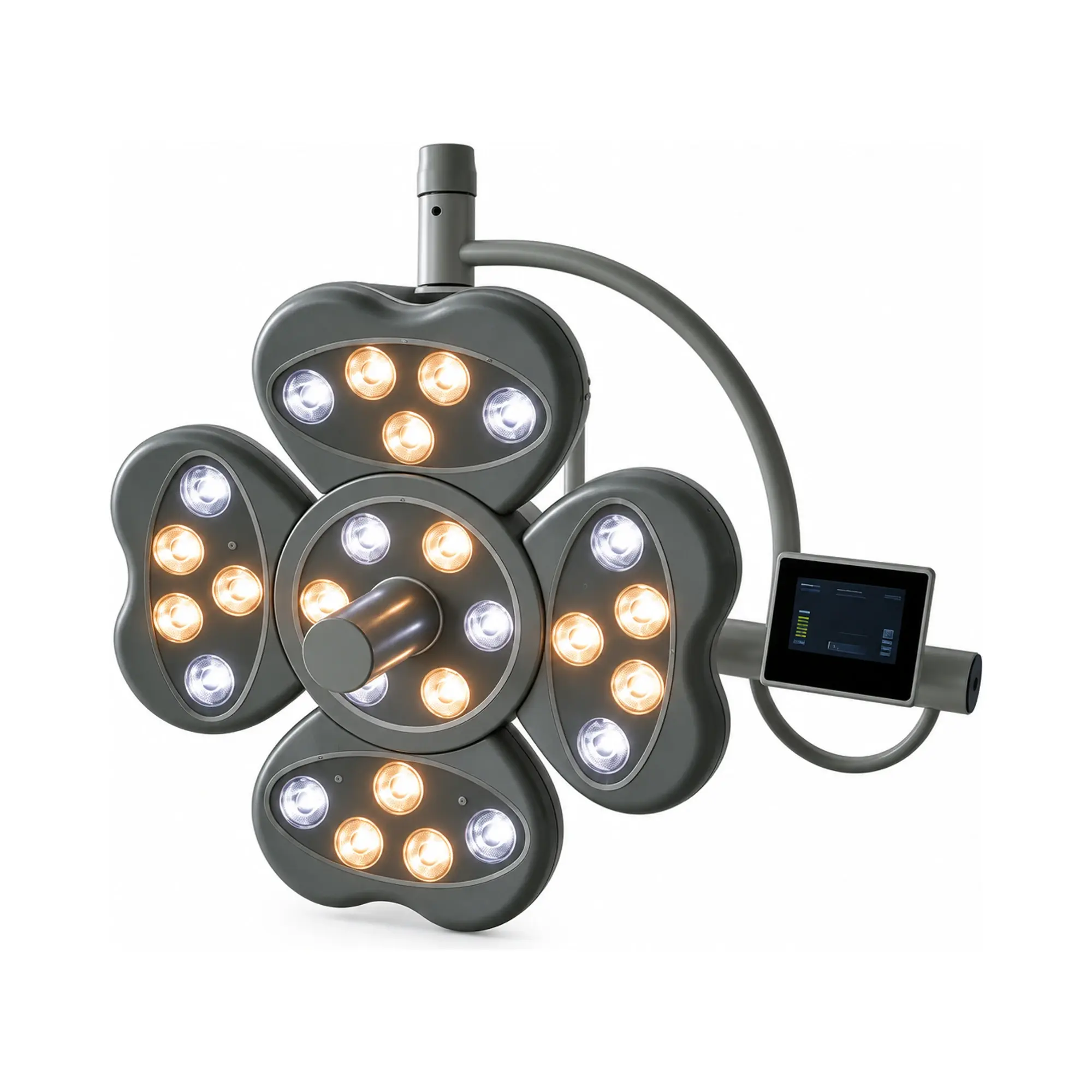
The buying decision, clearly stated.
Choose the light from the documented procedure and intended-use statement, then verify the complete configuration. A routine dental operating light and a light intended specifically for oral surgery may fall under different standards and evidence requirements. ISO 9680:2026 covers operating lights for dental treatment but explicitly excludes lights designed specifically for oral surgery; a product name alone does not establish compliance or suitability.
- Write the intended procedure before comparing lux or LED count.
- Ask for evidence that names the exact model, revision, mount and destination market.
- Do not extend a Chinese filing, design patent or another brand's certification to every Colight light.
Begin with the task and the standard's scope
The first question is whether the buyer needs light for routine dental treatment, oral surgery or both under a documented configuration. ISO 9680:2026 describes requirements and test methods for operating lights intended to illuminate the patient's oral cavity during dental treatment. Its published scope excludes operating lights specifically designed for oral surgery. The exclusion is a boundary to investigate, not a declaration that one category is superior.
Write the task in the RFQ: procedure type, working position, room, users, required field and intended mounting. Request the manufacturer's intended-use statement for the exact ordered device. Do not assume that a model with 'surgical' in its marketing name has every feature, approval or backup provision used in a hospital operating theatre. Local regulatory assessment remains specific to the destination and device.
Evidence context: ISO
Compare light functions without borrowing another brand's claims
FARO's B75 is a useful industry example because its own product information separates dental and surgical illumination functions in one product. That description belongs to FARO. It does not show that another light has the same field shape, intensity, mode switching or intended use. A Colight buyer should compare the Colight model sheet and quotation with the actual procedure rather than copying a competitor's headline values.
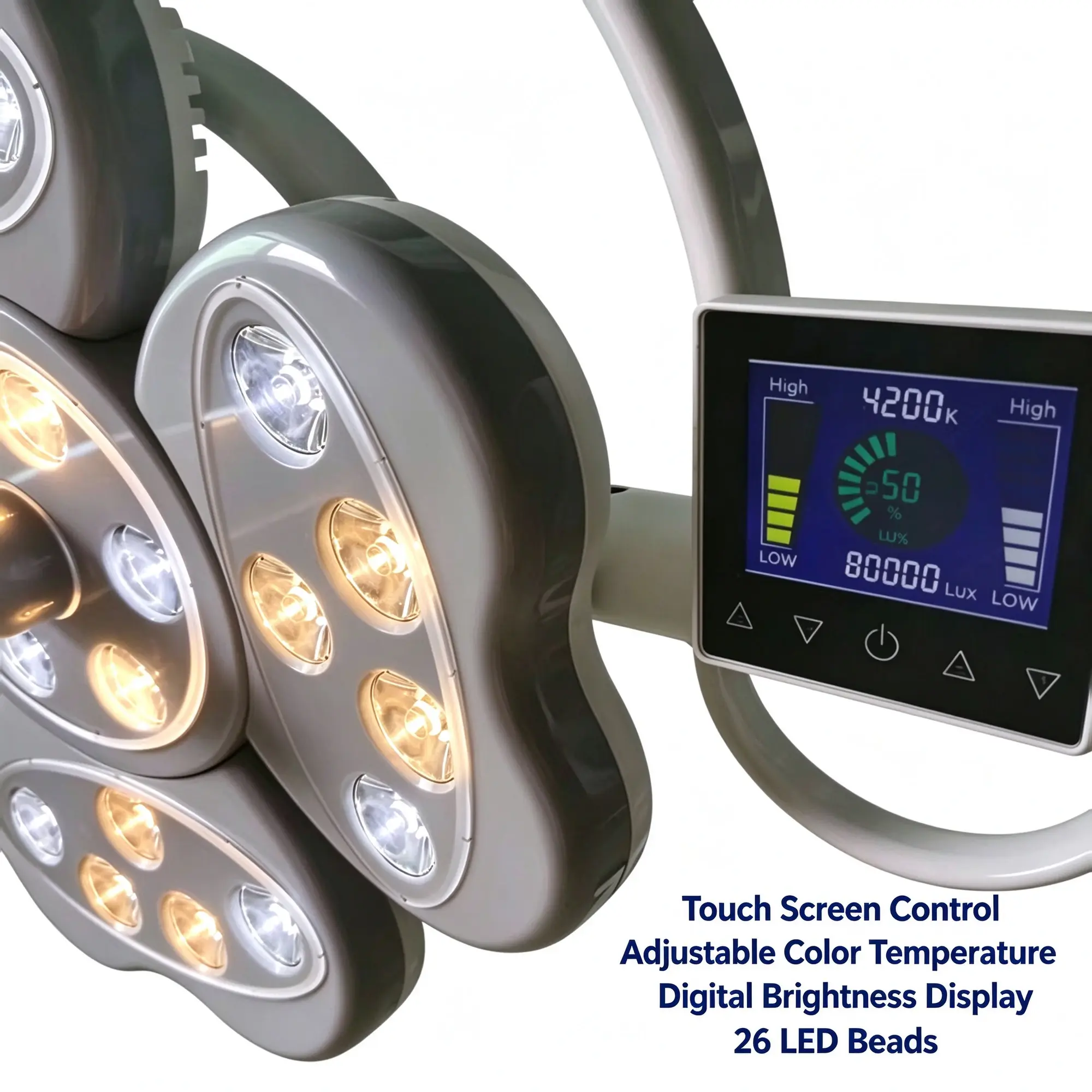
Request the field shape and dimensions at a stated distance, illuminance and its measurement conditions, color characteristics where relevant, controls and dimming behavior, heat or radiance information when required, and any applicable test report. A value without distance, mode and test method is difficult to compare. If a figure is absent from Colight's published product data, mark it 'supplier confirmation required' instead of filling it from a visually similar lamp.
Evidence context: FARO
Evaluate the whole installed system
A head that appears suitable on a product page may be paired with a chair arm, wall mount, ceiling mount or mobile base. Each assembly changes reach, stability, power integration and servicing. Check where the light must be positioned throughout the procedure, whether the arm holds position, whether staff can reach controls without interrupting the field, and how the assembly is cleaned according to its instructions.
Keep the head model, arm or stand, supply arrangement, installation drawing and operator instructions together. A sample fitted to a temporary stand does not approve a chair-mounted order. If the room has power interruption or backup requirements, obtain a specific engineering and facility assessment; this guide makes no emergency-power or operating-theatre claim for Colight products.
Read evidence by model, market and claim
Colight's company page displays Chinese Class I device and production filings and a published design patent. Those records document a particular company, filing or design scope. They are not blanket evidence of ISO 9680:2026 compliance, foreign market authorization or clinical performance of every catalogue item. A historical EMC report cover likewise applies to its named historical model, not a current family by implication.
For a formal purchase, request the current instructions, model-specific technical sheet, applicable conformity documents, report identifiers and revision, plus the destination-market documents requested by the importer or institution. Record who reviewed each document and which claim it supports. If the buyer cannot link a document to the ordered configuration, the evidence gap stays open even when the sales image looks convincing.
Two procurement briefs that need different evidence
These are buyer jobs, not an unverified performance ranking of products.
Routine dental treatment
- Useful for
- A clear oral-cavity lighting task allows focused review of operating-light characteristics.
- Check carefully
- A routine-use label does not prove suitability for every procedure or installed position.
- Decision context
- General treatment rooms with a documented dental operating-light requirement.
Oral surgery project
- Useful for
- A procedure-specific brief surfaces field, positioning, backup and documentation questions early.
- Check carefully
- The word surgical on a page does not answer the standards or destination-market question.
- Decision context
- Purchases that require a separate intended-use and engineering review.
Put the evidence beside the decision.
| Question | Evidence to request | Hold point |
|---|---|---|
| Procedure | Written intended-use statement | Unclear routine versus surgery scope |
| Optics | Field, distance, mode and test conditions | Unmatched headline values |
| Assembly | Head, mount, supply and installation drawing | Sample differs from order |
| Regulatory | Destination-specific documents with model and revision | Company-wide record used as model proof |
| Maintenance | Instructions for cleaning, inspection and service | Processing method assumed from appearance |
From use case to approved configuration
- 01
Describe
Name the intended procedures, room and users.
- 02
Scope
Check the manufacturer's intended use and relevant standard boundaries.
- 03
Specify
List optical, mounting, controls and facility requirements.
- 04
Evidence
Match each report and instruction to model, revision and market.
- 05
Approve
Trial and sign off the actual complete assembly.
Example: one clinic, two different light requests
A hypothetical clinic plans a general treatment room and a room reserved for oral procedures. Procurement initially requests the same high-lux lamp for both. The project team instead writes separate intended-use briefs. For the general room, it records routine operating-light needs and the installed chair interface. For the procedure room, it asks for procedure-specific light-field, mounting and documentation evidence.
The two briefs may ultimately lead to one approved platform or two different assemblies, but that is an outcome of supplier evidence and sample review. This example does not recommend a particular clinical device or claim that any Colight model is cleared for a particular surgery. It shows why a shared catalogue category cannot replace an actual intended-use decision.
Questions buyers ask next.
Does ISO 9680:2026 cover every dental surgical light?
No. The published scope of ISO 9680:2026 excludes operating lights specifically designed for oral surgery. Ask which standards and evidence apply to the exact model and intended use.
Is a higher lux number enough to select a surgical light?
No. Compare the measurement distance, field, modes, installed geometry, instructions and destination-specific evidence alongside the procedure brief.
Does Colight's design patent certify performance?
No. A design patent identifies protected design subject matter. It is not a model-specific optical test, regulatory clearance or proof of clinical suitability.
What information should an RFQ include?
State procedures, room and mount, expected working distance, control needs, destination, document requirements and sample approval process. Ask Colight to confirm the exact quoted configuration.
Follow the evidence.
Manufacturer and institutional sources inform the context. Colight specifications come from the verified site catalogue; competitor values are not presented as Colight test results. References were checked on 2026-10-31.
- ISO 9680:2026 — Dentistry: Operating lights
Edition and scope reference; the full standard is not reproduced. Publication: May 2026. Checked October 27, 2026.
- FARO B75 — dual-function dental and surgical light
Competitor example showing separate dental and surgical functions; no direct Colight comparison. Checked October 31, 2026.
Corrections or missing project evidence: contact Colight. The page supports purchasing discussions and does not provide patient-specific care, electrical installation instructions or a legal market-access decision.