
Dental operating-light cleaning and maintenance: build the handover file
Ask for component-specific instructions, distinguish barriers from processing, and keep maintenance observations and service escalation tied to the delivered lamp configuration.
Start with the answer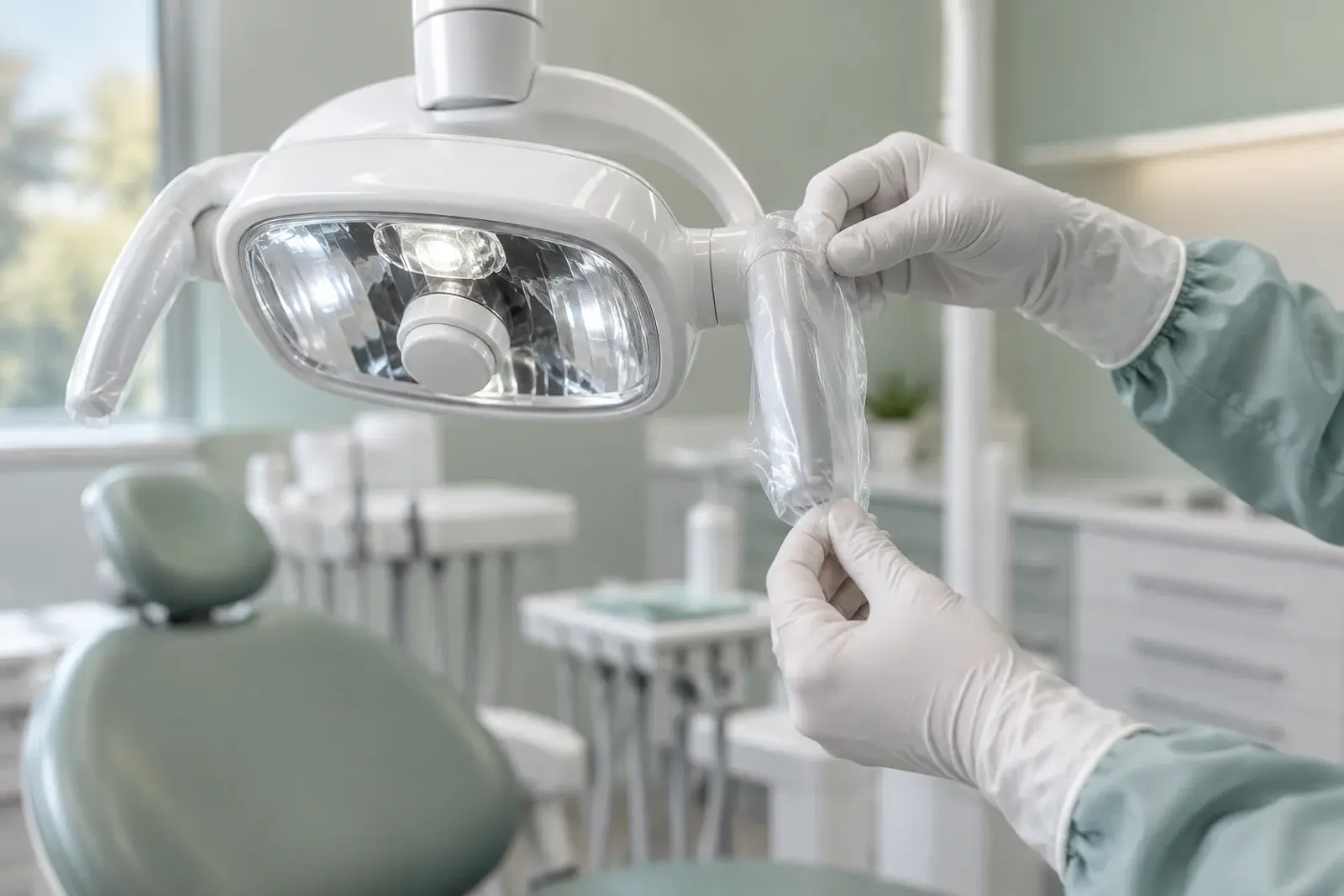
The buying decision, clearly stated.
Build the handover around the exact device instructions, component by component. Confirm permitted cleaning, disinfection, barriers and any removable-part processing separately; do not assume a handle is autoclavable or that one chemical suits every surface. Keep model identity, observed faults and an agreed service route available to the clinical and maintenance teams.
- Light handles and controls need a documented surface-management process.
- Sensor operation does not eliminate the need for an appropriate hygiene workflow.
- Stop normal use and seek assessment when a fault could affect safe positioning, wiring or normal operation.
The instructions are part of the purchase, not an afterthought
Before approving the order, ask which instructions will accompany the delivered configuration and in which language. A lamp head, removable handle, optical cover, sensor area, arm and base may require different handling. The handover file should identify those components and link each one to the relevant supplied instructions, rather than relying on a generic cleaning sentence in a sales brochure.
If the supplier has not confirmed whether a component is removable, compatible with a process or replaceable, leave that field unresolved. The Colight source-sheet features used on this site do not establish sterilization cycles, chemical compatibility, ingress ratings or maintenance intervals for every model. Request the applicable instructions instead of completing the gaps with another manufacturer's guidance.
Separate barriers, cleaning and disinfection
CDC identifies light handles as clinical contact surfaces and describes barrier or surface-management approaches for dental settings. This is general context, not a device-specific processing instruction. The facility must apply its infection-prevention procedures, relevant local requirements and the actual product instructions together, rather than treating a purchasing article as a replacement protocol.
In the handover checklist, distinguish the barrier type and change procedure from cleaning and disinfection requirements. For each relevant surface, request the permitted agents, application method, contact conditions and limitations from the appropriate instructions. Do not invent a universal concentration, spray method, soak time or heat cycle. A transparent sleeve shown in an illustration is not a claim that it fits or is approved for every lamp.
Controls and removable parts need different questions
Touchless adjustment can reduce some handling tasks, but the lamp may still be repositioned, its handles touched or its surfaces exposed during routine work. A sensor feature alone does not establish an infection-prevention outcome. Ask the clinical evaluator how normal adjustment and repositioning fit into the facility's existing process, and verify that the supplied instructions are usable at the point of care.
Dentsply Sirona describes removable handles and processing for its own LEDview Plus. That is a useful example of why a supplier should identify the specific part and permitted process. It is not permission to process a Colight handle by the same method. Keep part identity, removal instructions, replacement identification and applicable processing information together.
Evidence context: Dentsply Sirona
Create a fault record that service can act on
Use observations that describe the fault without asking staff to dismantle the lamp. Useful records include model and configuration, when the issue appears, the control state, visible damage, unexpected movement, abnormal operation and whether it followed a change or relocation. Photographs or a short video can help support identify the issue, provided patient information and confidential material are excluded.
If damage, unstable positioning, suspect wiring, abnormal heat or another condition could affect safe use, remove the equipment from normal service according to the facility's procedures and contact the responsible service party. Do not prescribe internal electrical repair, improvised lubrication or unspecified tightening from this guide. Reuse after service should follow applicable instructions and an appropriate release decision.
A generic cleaning note versus a usable handover
The aim is a retrievable instruction set, not extra paperwork without an owner.
One instruction for the whole light
- Useful for
- Looks simple and is easy to repeat informally.
- Check carefully
- Can hide differences between optics, controls, handles, joints and the base.
- Decision context
- Only a confirmed process whose scope is genuinely established by the device instructions.
Component-specific handover file
- Useful for
- Connects each surface or part to the permitted method and responsible team.
- Check carefully
- Must be kept aligned with the actual configuration and revised instructions.
- Decision context
- Clinics, projects and distributors maintaining repeatable support across installations.
Put the evidence beside the decision.
| Component or task | Request and retain | Unresolved claim to avoid |
|---|---|---|
| Handle | Part identity, removal status and applicable processing instructions | Every handle is autoclavable |
| Optical cover | Permitted agents, method and surface limitations | Any disinfectant is safe for every lens |
| Sensor and controls | Cleaning method and normal operating checks | Touchless means no hygiene process is needed |
| Arm and mounting | Authorized inspection and adjustment guidance | Routine improvised tightening fixes every movement issue |
| Service event | Fault description, responsible service contact and release record | A remote article can authorize internal repair |
A supportable care and service handover
- 01
Identify
Record the exact head, arm, base and removable parts supplied.
- 02
Obtain instructions
Request the applicable language and component-specific processing guidance.
- 03
Assign responsibility
Connect daily care, inspection and service escalation to the facility team.
- 04
Log observations
Record faults and changes without unauthorized disassembly.
- 05
Escalate and release
Use the responsible service route and document the return-to-use decision.
Worked example: a handle-processing question at installation
A hypothetical clinic receives a new head whose handle resembles one used on its previous light. Staff ask whether the old processing cycle can be reused. The correct next step is to identify the supplied handle and obtain its applicable instructions, not to infer heat compatibility from the colour, shape or the fact that another brand has removable handles.
The handover record keeps the question open until the supplier confirms the component and permitted process. Meanwhile the facility decides the appropriate handling arrangement under its own procedures and the available instructions. Once confirmed, the instructions are accessible to the team using the equipment and any replacement part is checked against the same record. The example illustrates a documentation decision rather than prescribing a clinical processing protocol.
Questions buyers ask next.
Are Colight handles automatically autoclavable?
This guide makes no such claim. Confirm the exact part, whether it is removable and the permitted processing method from the applicable manufacturer instructions. Appearance alone is insufficient.
Can I use one disinfectant on the entire lamp?
Only if the relevant instructions permit it for all affected components and the facility's process is appropriate. Request component-specific compatibility and application guidance; this article provides no universal chemical or heat parameters.
Does a touchless sensor remove cleaning requirements?
No. The lamp may still be touched or exposed during use. Integrate the device instructions with the facility's infection-prevention process and local requirements.
What information helps technical support assess a fault?
Provide the model and configuration, installation details, observed behaviour, control state, recent changes and clear non-confidential photographs or video. Identify the responsible installer or service party, and avoid unauthorized internal repair.
Follow the evidence.
Manufacturer and institutional sources inform the context. Colight specifications come from the verified site catalogue; competitor values are not presented as Colight test results. References were checked on 2026-10-27.
- LEDview Plus — manufacturer brochure
Industry example of model-specific electrical and composite-mode documentation. Checked October 27, 2026.
- Environmental infection prevention and control in dental settings
General dental surface guidance, published May 15, 2024; apply local requirements and the specific device instructions. Checked October 27, 2026.
- Sterilization and disinfection — dental infection prevention
General reference on following product instructions; not evidence that any Colight component is autoclavable. Checked October 27, 2026.
Corrections or missing project evidence: contact Colight. The page supports purchasing discussions and does not provide patient-specific care, electrical installation instructions or a legal market-access decision.