
Dental-light packaging and incoming inspection: close the evidence chain
Agree a route-specific packaging brief, inspect the delivered configuration, and keep arrival damage, functional checks and commercial claims as separate records.
Start with the answer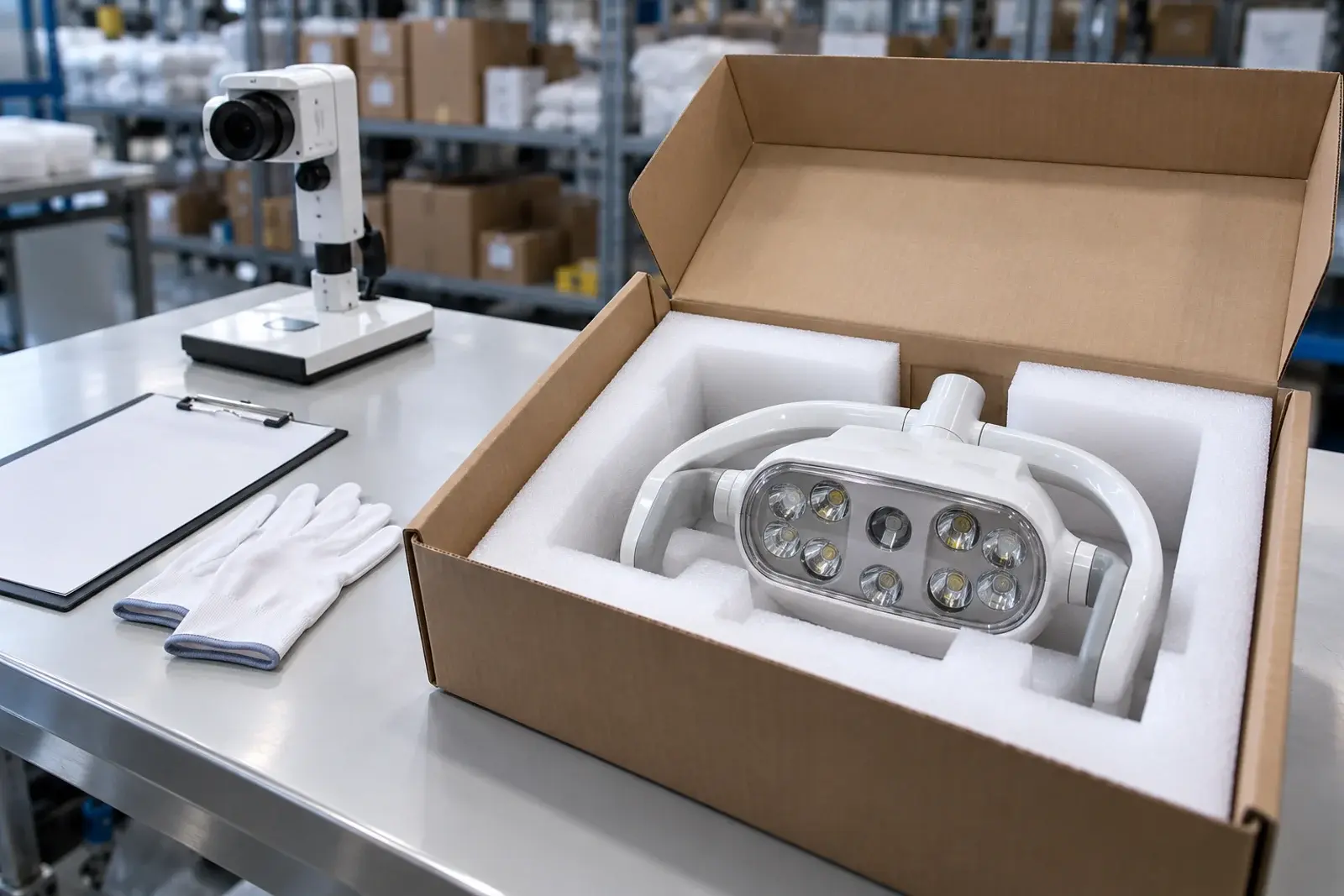
The buying decision, clearly stated.
Agree packaging around the actual product, shipping route and handling conditions, then inspect arrivals against the ordered configuration and approved record. Photograph arrival condition before unpacking, separate transport damage from specification mismatch, and release units only after the required checks. Neither a carton photograph nor a head's shipping dimensions establishes tested transit performance for a complete assembly.
- A head, an arm and a mobile system have different packing scopes.
- Choose any transit-evaluation method for the actual distribution route and packaged product.
- Record condition, configuration and functional acceptance separately so each issue reaches the right owner.
Start from the route and the complete shipped scope
List every shipped component: head, handles, arm, mounting hardware, base, cable, supply and documents where included. Confirm whether they travel as individual cartons, combined packages or a unitized load. Identify the planned distribution route, handling stages, storage conditions and receiving arrangements so the supplier can discuss a packing design for the real job.
Do not use a standard head's carton dimensions or gross mass as the packing specification for an arm assembly or mobile system. Those values describe the source model and stated packing scope. A changed accessory set, different assembly or custom configuration may change the package. Ask for the order-specific packing list, package identification and dimensions before using them for freight planning.
Ask what a packaging test actually represents
ISTA distinguishes screening approaches from transport-simulation procedures. Its procedure information also separates parcel and other distribution environments. The useful question is therefore not simply whether a carton was drop tested, but what packaged product, method, route assumptions and acceptance criteria were used.
If transit evidence is required, agree the assessment with competent packaging or testing personnel. Identify the product configuration, cushioning, carton design, closures and any accessories included in the test package. A report for another product or a changed packing design may not answer the current order's question. This guide does not claim that Colight has passed an ISTA procedure or prescribe an improvised transit-test sequence.
Evidence context: International Safe Transit Association
Capture arrival condition before the evidence is disturbed
At receipt, follow the agreed receiving process and record shipment identity, package count, visible condition and any handling exceptions. Photograph relevant damage and identification before unpacking, then keep affected packing materials and records as appropriate for the agreed claims process. Avoid publishing labels or personal information in support images.
During unpacking, compare the packing list and order with the actual model, options, accessories and document versions. A clean carton does not prove the correct connector or controls were supplied; a damaged carton does not, by itself, identify the internal fault. Separate the condition record from the configuration check so supplier and carrier discussions use the same facts.
Release to stock or installation against agreed checks
Incoming functional checks should follow the applicable instructions and the buyer's approved plan. Confirm responsibility for electrical or assembly evaluation rather than asking warehouse staff to energize an unknown configuration. Define how findings are classified, who can release a unit and how an unresolved item is identified and held away from normal stock or installation.
The best handover connects the purchase order, accepted sample or configuration, shipment, inspection observations and resolution. Record whether a problem concerns damage, missing parts, wrong configuration, documentation or operation. Do not estimate a universal acceptable defect rate or claim deadline from this guide; sampling, acceptance limits, remedies and commercial timing must be agreed for the order.
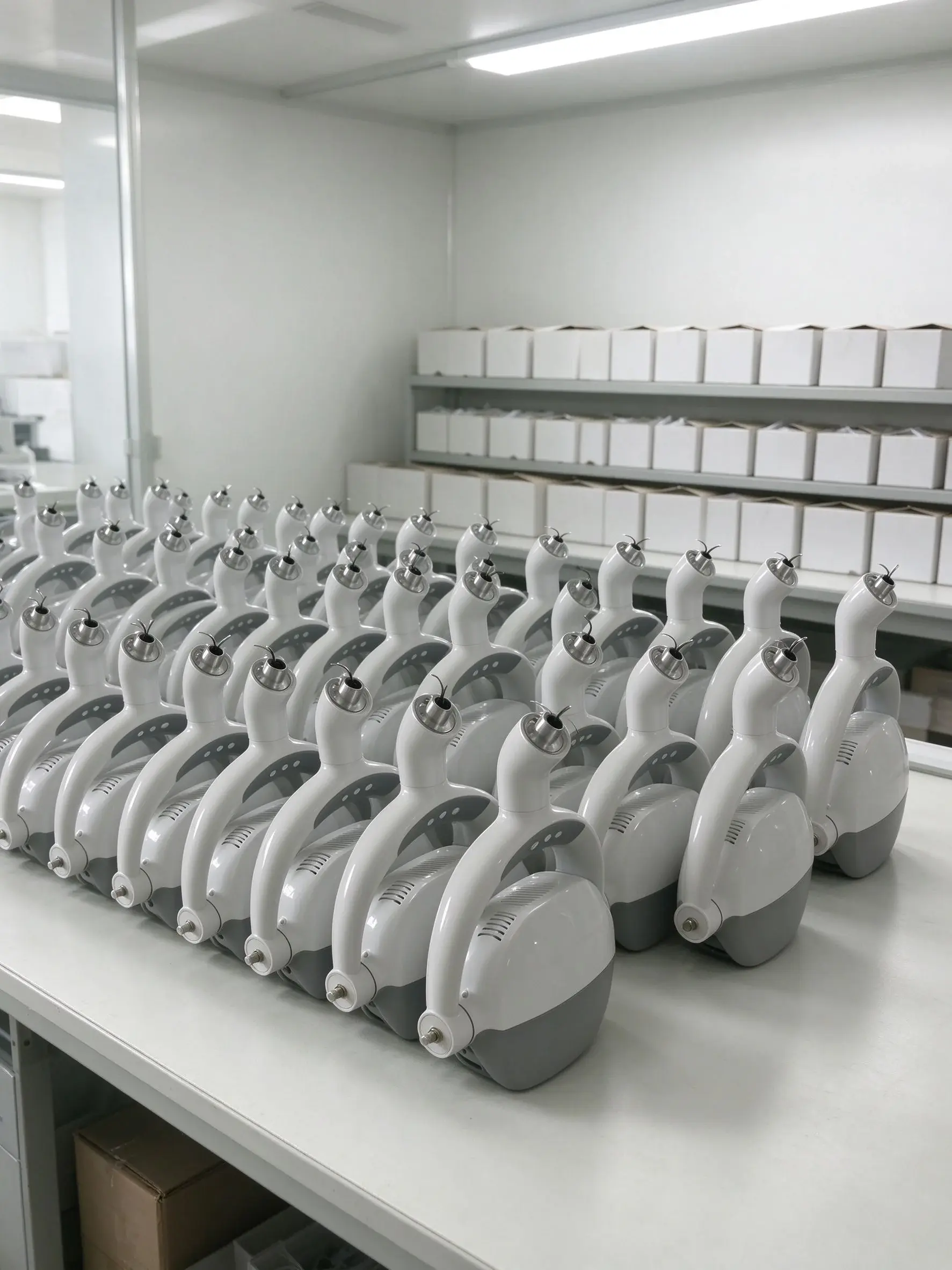
Packaging appearance versus verified order protection
Good-looking foam and cartons are useful design inputs, but their appearance is not a transport result.
Packaging photograph only
- Useful for
- Shows the proposed arrangement and helps clarify the supplied scope.
- Check carefully
- Cannot establish cushioning performance, route suitability or test coverage.
- Decision context
- An early packing discussion and identification of missing design information.
Order-specific packing and acceptance record
- Useful for
- Connects the shipped configuration, route assumptions and agreed checks.
- Check carefully
- Needs review when the product, accessory set, route or packaging changes.
- Decision context
- Repeat orders and shipments where damage or configuration ambiguity matters.
Put the evidence beside the decision.
| Stage | Capture | Route the issue to |
|---|---|---|
| Receipt | Shipment identity, carton count and external condition | Receiving lead and agreed transport contact |
| Unpacking | Internal protection, component count and damage photographs | Supplier quality and relevant claims owner |
| Configuration check | Model, connector, options, accessories and revisions | Purchasing and supplier technical team |
| Required functional checks | Method, responsible evaluator and observed result | Authorized technical or service personnel |
| Release or hold | Decision, unresolved items and traceable location | Authorized incoming-quality owner |
From packing agreement to release
- 01
Define transport scope
List components, route, handling and receiving requirements.
- 02
Confirm packing
Agree design, identification and any required transit evidence.
- 03
Record arrival
Capture shipment and package condition before unpacking.
- 04
Check configuration
Compare the delivered parts and documents with the approved order.
- 05
Evaluate and release
Use authorized checks, resolve findings and record release or hold.
Worked example: correct lamp head, incorrect connector option
A hypothetical distributor receives cartons in good condition and initially plans to release them to stock. During the configuration check, the receiver finds that the delivered connector option differs from the approved order. The lamps are held under the distributor's process while purchasing and the supplier identify the affected shipment and agree a resolution.
The issue is logged as a configuration mismatch rather than shipping damage, and no improvised adapter is fitted to make the stock usable. If another unit also shows damage, that observation receives its own condition evidence and claims route. The separation makes it easier to resolve the actual problems without losing the connection between the order, packing, delivery and accepted sample.
Questions buyers ask next.
Does foam packaging prove a dental light is protected for every route?
No. Protection depends on the packaged product, design and transport conditions. Ask for the order-specific arrangement and appropriate evidence where required; a photograph is not a transit test.
Can head carton dimensions be used for a full mobile system?
No. Confirm dimensions, mass, component count and packing scope for the actual complete order. A head's source-sheet values do not establish the shipment details of an arm or mobile assembly.
Should receiving staff perform electrical checks immediately?
Only under the applicable instructions, approved inspection plan and authorized responsibilities. Unconfirmed electrical or assembly conditions should be escalated rather than improvised at the receiving bench.
What claim deadlines or sampling levels apply?
They must be confirmed in the order and relevant commercial arrangements. This guide does not establish a universal claim deadline, defect allowance, sampling plan or remedy.
Follow the evidence.
Manufacturer and institutional sources inform the context. Colight specifications come from the verified site catalogue; competitor values are not presented as Colight test results. References were checked on 2026-10-27.
- ISTA test procedures — selecting a distribution test
Packaging method reference, not an assertion that Colight packaging has passed an ISTA procedure. Checked October 27, 2026.
Corrections or missing project evidence: contact Colight. The page supports purchasing discussions and does not provide patient-specific care, electrical installation instructions or a legal market-access decision.