
How to evaluate dental-light shadows in a four-handed workflow
A practical chairside test for light obstruction, repositioning and team visibility before approving a dental operating light.
Start with the answer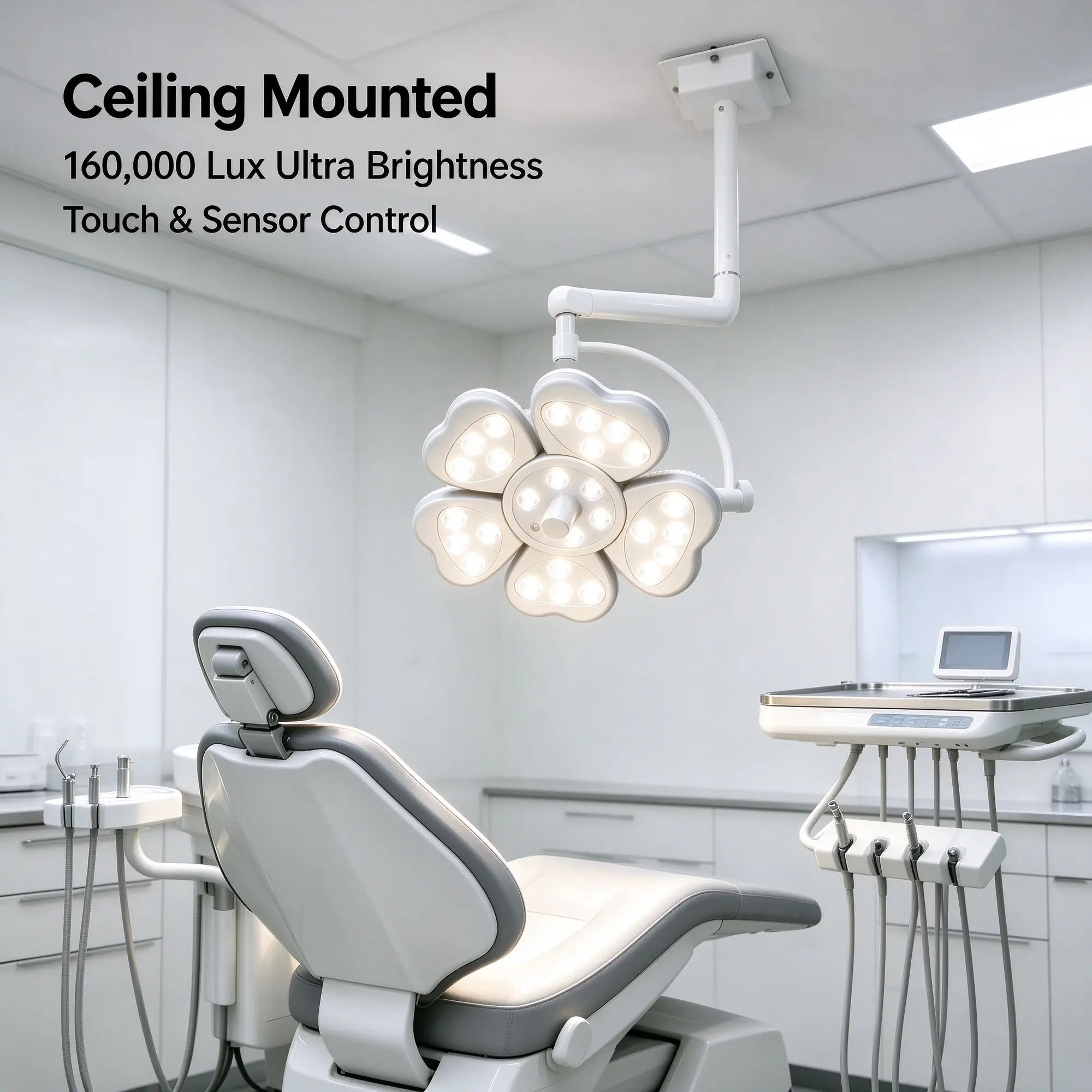
The buying decision, clearly stated.
Test shadow control with the complete light installed at the intended chair. Hold the same mouth-level target, patient position and light setting while the dentist's hands, assistant's hands and instruments enter the field. Record whether the target stays visible and how often the team must reposition the head. LED count or a single lux value cannot answer that question.
- Use one fixed target and repeat the same hand positions for each candidate.
- Record the entire lamp, arm and chair geometry, because head-only comparisons miss positioning limits.
- Separate an obstructed beam from inadequate brightness; increasing intensity may not remove a shadow.
Define the obstruction before comparing lights
A dental operating light can have an impressive central illuminance figure and still leave an inconvenient shadow when a hand or instrument crosses the beam. A-dec's lighting white paper discusses how the distribution of the light source affects shadows; Planmeca's ergonomic material connects lamp positioning to two- and four-handed access. These are useful design references, not independent tests of any Colight model.
The buyer's question is operational: can the team maintain a usable view of the same working area while performing normal movements? Identify which person blocks the beam, where they stand, which instruments are raised, and whether the obstruction happens repeatedly. A vague report that a lamp is 'shadowless' is not a substitute for a defined test.
Build a repeatable chairside test
Fit the intended head, arm and chair mount before testing. Mark a mouth-level target on a suitable training model, then record chair height, backrest angle, operator and assistant positions, lamp-to-target distance, selected light mode and brightness. Keep those conditions constant when changing only the candidate light. A simulator or training model makes the exercise repeatable without making a clinical outcome claim.
Ask each participant to perform three realistic occlusions: an operator hand approaches the target, an assistant hand crosses from the opposite side, and a common instrument passes between the head and target. Observe the center and edges of the illuminated area. Record whether the target is visible, partially obscured or unusable and whether moving the lamp restores visibility without forcing awkward working posture.
Check geometry before turning up intensity
A shadow may result from the angle of incidence, the distance or the hand position rather than low output. Test the head at several supported positions with the arm's actual reach and holding force. If the head drifts or collides with another item, the lamp head's optical specification will not solve the installed problem. Note any cable or arm restriction that prevents the preferred position.
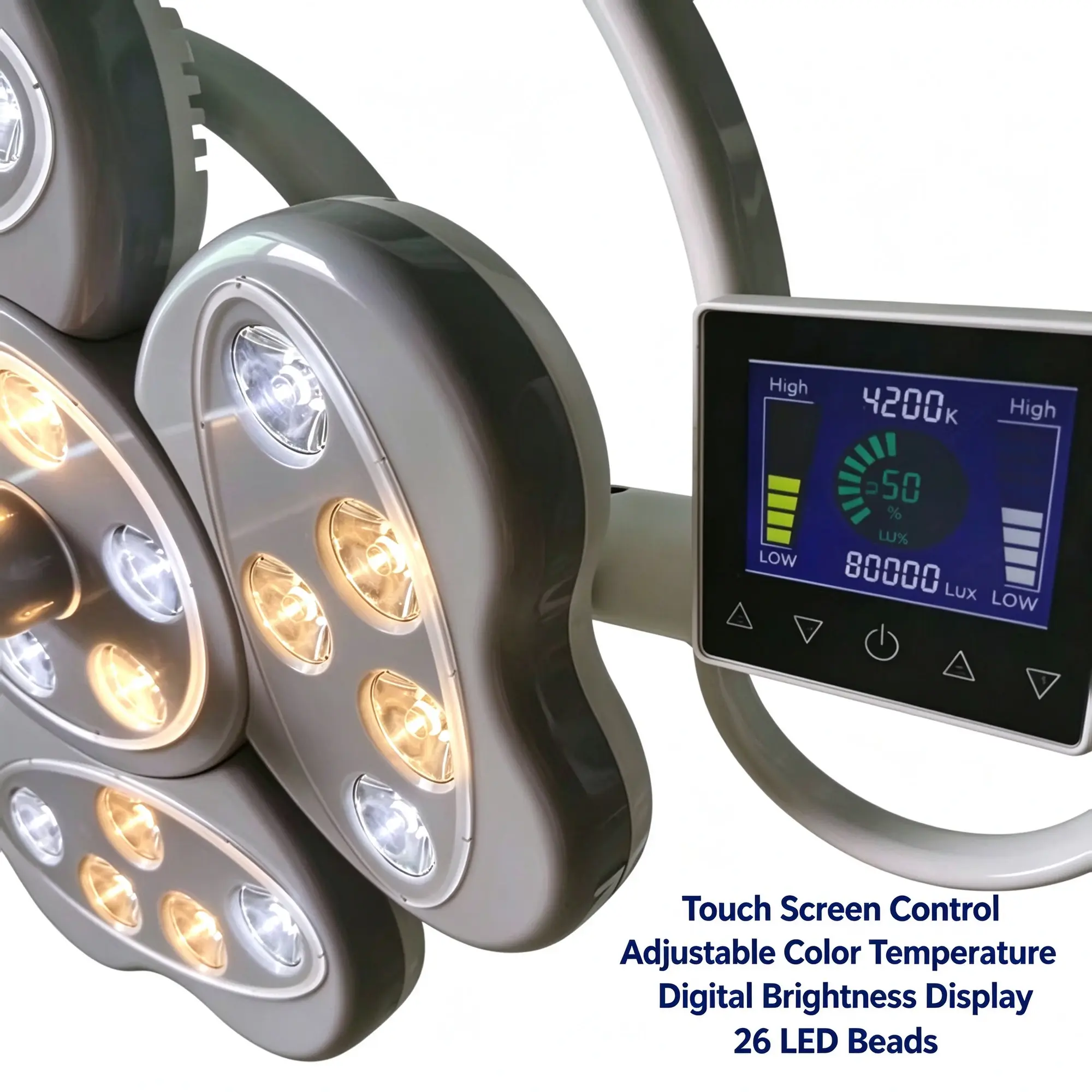
Do not use a competing brochure's beam size as though it were measured on the Colight model. Request model-specific photometric information and the measurement conditions if the project requires numerical comparison. The supplied Colight catalogue lists some head values, but it does not publish a validated four-handed shadow score for the assembled installations described here.
Turn observations into an acceptance decision
Set a practical acceptance rule before the demonstration: for example, a named target must remain visible through the agreed movements, or the team must be able to restore a useful view with one permitted repositioning. The precise threshold belongs to the buyer and clinical team; this guide does not prescribe a universal clinical threshold. Record video only if permitted by the site and keep patient information out of the evaluation.
If two candidates meet the visibility rule, compare their controls, service instructions, cleaning approach and installation scope separately. Do not allow one attractive optical observation to conceal an unverified connector or maintenance issue. Keep the test sheet with the sample serial or revision and the final quotation so that the supplied assembly matches the approved arrangement.
Brightness check versus workflow check
Both observations are useful, but they answer different purchasing questions.
Single-point brightness check
- Useful for
- Documents a value at a defined position and setting.
- Check carefully
- Cannot show what happens when hands and instruments interrupt the beam.
- Decision context
- Comparing declared optical values when measurement conditions match.
Four-handed obstruction trial
- Useful for
- Reveals team visibility and repositioning needs in the actual installation.
- Check carefully
- Results depend on a controlled setup and recorded participants' movements.
- Decision context
- Approving chairside usability of a specific assembled configuration.
Put the evidence beside the decision.
| Observation | Record | Decision question |
|---|---|---|
| Baseline | Target, chair angle, distance, mode and brightness | Can the setup be repeated? |
| Operator occlusion | Position, duration and target visibility | Is a routine movement disruptive? |
| Assistant occlusion | Hand and instrument path from the opposite side | Can both team members see the field? |
| Repositioning | Number of moves and arm holding behavior | Does recovery interrupt the workflow? |
| Configuration identity | Head, arm, mount, revision and sample ID | Will the order match the trial? |
A five-step visibility approval
- 01
Define
Choose a fixed training target and the team's normal positions.
- 02
Install
Use the proposed head, arm and chair mounting arrangement.
- 03
Repeat
Perform the same operator and assistant occlusions for each candidate.
- 04
Record
Log visibility, head moves, setting and configuration identity.
- 05
Approve
Sign the acceptance sheet and attach it to the procurement record.
Example: two rooms with different assistant positions
A hypothetical clinic has one right-handed room and one room that regularly changes team positions. Its buyer tests the same proposed lamp head in both completed assemblies. In the first room, the target remains visible during the chosen movements. In the second, the assistant's instrument blocks the target from the usual lamp angle; a different head position is needed.
That result does not prove the lamp is good or bad in every clinic. It identifies a room-specific installation and training issue. The project team can adjust the agreed positioning, consider a different complete assembly or hold the second room for more evaluation, while documenting the decision without inventing a numerical shadow rating.
Questions buyers ask next.
Does more LEDs always mean fewer shadows?
No. LED count does not describe source placement, beam geometry, installed angle or the team's hand positions. Use a controlled chairside obstruction trial for the actual assembly.
Can higher brightness compensate for a blocked beam?
It may change perceived visibility, but it does not necessarily remove the occlusion. Check geometry and positioning before treating intensity as the solution.
Is a photo enough to approve shadow control?
No. A catalogue photo documents appearance. Record a repeatable target, hand movements, lamp position and configuration identity in a live sample evaluation.
What should a distributor ask Colight for?
Send the chosen head and mount, chair platform, working positions, target distance and any required optical evidence. Request a sample and model-specific documents for the proposed configuration.
Follow the evidence.
Manufacturer and institutional sources inform the context. Colight specifications come from the verified site catalogue; competitor values are not presented as Colight test results. References were checked on 2026-10-31.
- A-dec white paper — LEDs in dental operatory lighting
Manufacturer discussion of shadowing and working geometry. Not a test of Colight products. Checked October 31, 2026.
- Planmeca — dental unit ergonomics
Manufacturer example of positioning and two- or four-handed work. Not a Colight performance claim. Checked October 31, 2026.
Corrections or missing project evidence: contact Colight. The page supports purchasing discussions and does not provide patient-specific care, electrical installation instructions or a legal market-access decision.