
Build a dental-light range your distribution team can support
A practical range-planning worksheet for distributors: separate customer jobs, interface variants and service obligations before adding another lamp model.
Start with the answer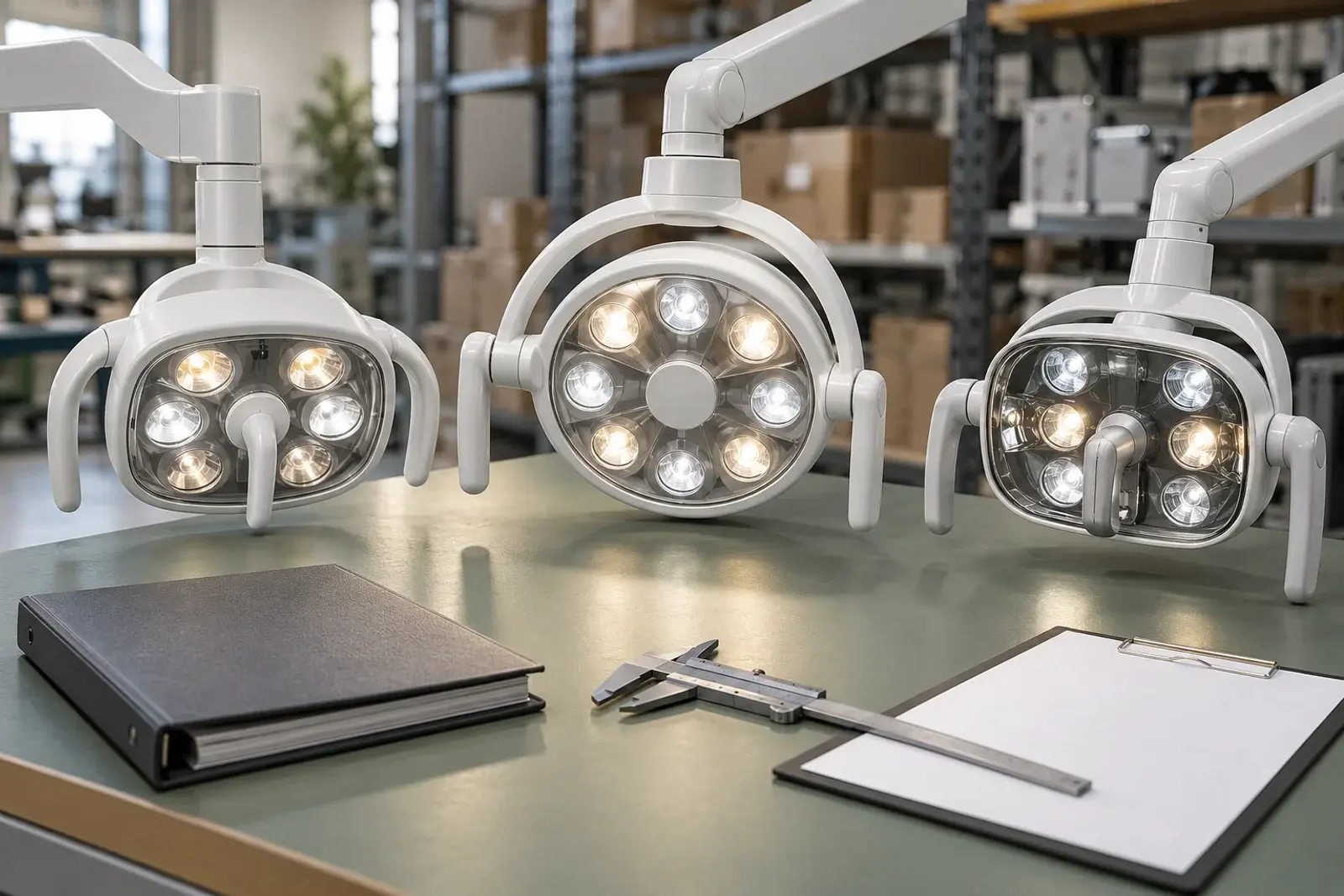
The buying decision, clearly stated.
Build the range around distinct customer jobs and supportable configurations, then approve samples for each important interface. A new model earns its place only when it serves a different need or reduces a documented constraint. More LED counts or larger headline lux values alone do not establish a useful range gap.
- Separate the lamp head from the connector, arm and delivery configuration in your stock record.
- Keep a reason to retain each model, an evidence gap and a named support owner.
- Treat unknown demand as a pilot question; do not turn an assumption into a stock commitment.
Start with the installation your customer is buying
A chair manufacturer purchasing repeat lamp heads, a dealer replacing an installed light, and a clinic fitting an additional room can all ask for a dental lamp. Their acceptance problems differ. The OEM needs a controlled interface and repeat deliveries; the replacement buyer needs the installed chair identified; the room project needs positioning, installation and support. Record those jobs separately before assigning a model.
Use a planning sheet with customer role, intended use, destination, chair or mounting platform, required controls, evidence needed and service responsibility. Start from your own enquiries when available. Until enquiry and sales data exist, the segments in this guide are planning hypotheses, not a prediction of local demand or market size.
Give each range position a defensible reason
A supportable opening range might distinguish a documented everyday head configuration from a different control requirement and a separately engineered arm or mobile installation. These are proposed range roles, not fixed Colight commercial tiers. Do not label products economy, premium or best-selling unless the supporting commercial evidence actually exists.
Write a one-sentence retain rule for every proposed model: retain it because a named customer job needs a documented feature, interface or installation scope. If two models serve the same job and your team cannot explain the operational difference, investigate whether one demonstration unit and order-based variants would be more manageable than stocking both. Confirm availability and ordering conditions with the supplier.
Evidence context: A-dec
Control variants without inventing new products
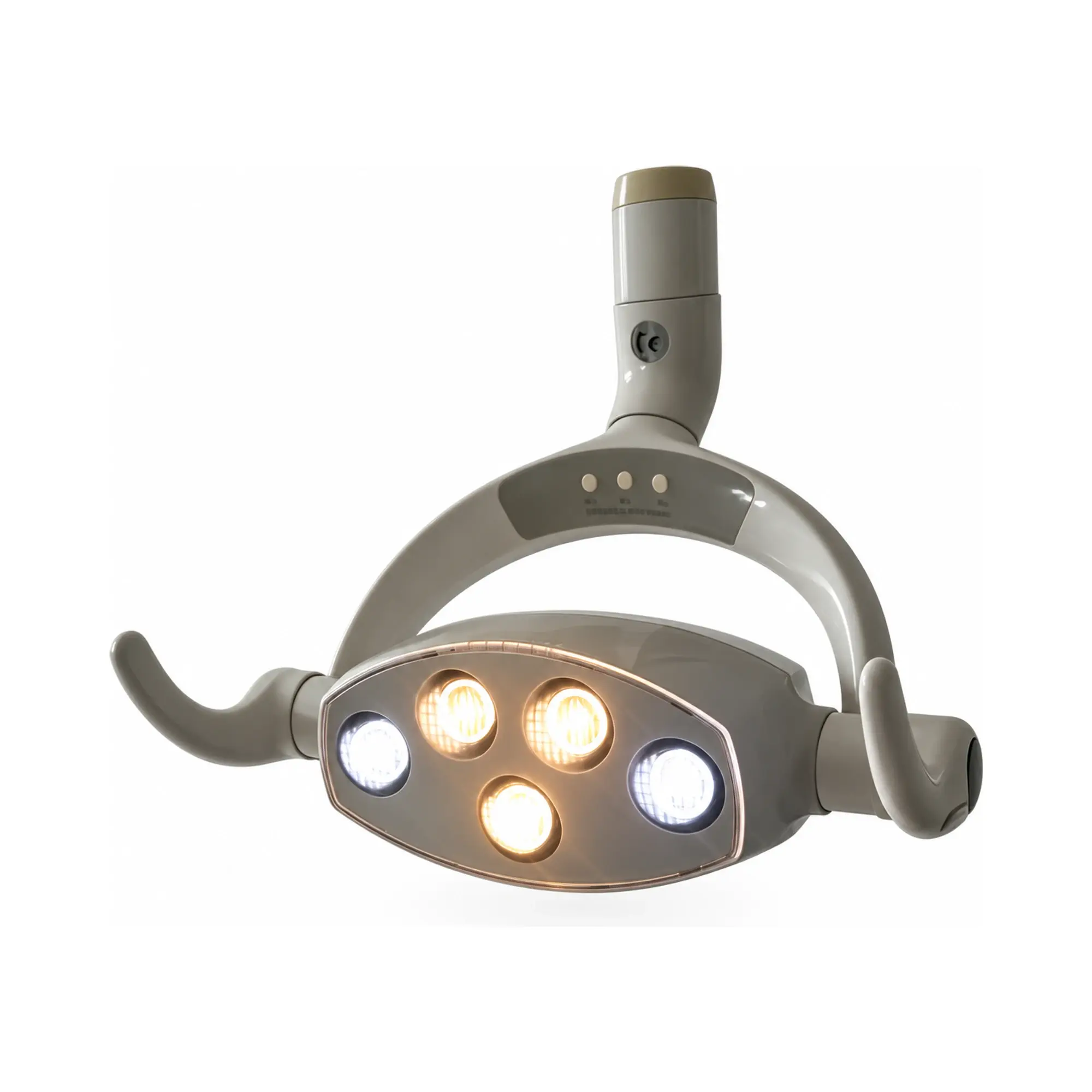
The Colight catalogue distinguishes standard lamp-head data from configured hardware. CL105 and CL106 are identifiable standard heads; a connector option or a photograph from another angle is not automatically another model. Keep model identity stable, and place connector, cable, mounting assembly, colour option and confirmed control arrangement in separate configuration fields.
For every sellable configuration, keep the supplier quotation, approved drawing or interface record, sample identifier, product-page reference and applicable instructions together. A sales team should be able to retrieve the same configuration record as the installer. A stock code that only says six-LED light leaves too much room for substitution, especially when several heads share the same LED count.
Evaluate support burden alongside the quotation
The useful comparison is not simply unit price. Ask what evidence, installer preparation, spare-part identification and staff training each configuration requires. Record which party handles diagnosis, whether parts can be identified by revision, what must be returned for assessment and how commercial warranty terms will be confirmed. Do not calculate lifetime savings from unverified service-life claims.
Current industry communications increasingly describe connected dental workflows. Planmeca's March 2025 IDS release is an example of that broader context, not evidence that every light must include software. For a distributor, the practical question is whether a feature creates a support obligation your team can meet. Colight camera, network or software compatibility must never be assumed from another manufacturer's portfolio.
Evidence context: Planmeca

Two ways to expand a range
This compares stocking approaches, not brand performance or guaranteed financial returns.
Many heads, weak configuration records
- Useful for
- Offers more visible choices at the demonstration stage.
- Check carefully
- Similar-looking variants can multiply stock, training and replacement ambiguity.
- Decision context
- Only a team with documented demand and configuration control for each addition.
Defined range roles, controlled variants
- Useful for
- Connects each item to a customer job and a retrievable installation record.
- Check carefully
- Requires saying no to unsupported combinations and reviewing missed enquiries.
- Decision context
- A distributor establishing a repeatable sales and service process.
Put the evidence beside the decision.
| Range decision | Evidence to collect | Retain or pause rule |
|---|---|---|
| Customer job | Actual enquiry and installation description | Pause if the target buyer is only a guess |
| Feature difference | Model-specific control and parameter record | Retain when a meaningful need is evidenced |
| Interface variant | Connector, supply, arm and cable confirmation | Pause unsupported substitutions |
| After-sales ownership | Named installer and support route | Retain only with a workable handover |
| Demand review | Qualified enquiries, sample results and lost-order reasons | Revisit assumptions before replenishment |
From range hypothesis to an approved stock position
- 01
Segment
Sort enquiries by installation job and buyer responsibility.
- 02
Map
Assign a distinct requirement and documented model to each proposed role.
- 03
Sample
Evaluate the actual head, interface and mounting configuration.
- 04
Prepare support
Link instructions, configuration identity and the service contact.
- 05
Review
Use observed enquiries and acceptance outcomes to keep, revise or remove the position.
Worked planning example: a dealer serving two chair platforms
Consider a hypothetical distributor receiving replacement enquiries for two different chair platforms. Both buyers ask for a five- or six-LED light. Instead of choosing by appearance, the distributor first records each chair's confirmed supply, connector geometry, arm condition and control expectations. The platforms remain separate interface cases even if the same head is later approved for both.
The pilot record then links a named sample configuration to each platform and records whether installation and operation were accepted. If both can use one confirmed head with controlled connector variants, the range can reflect that result. If one platform needs additional engineering, it remains a project enquiry rather than an advertised universal replacement. No demand forecast, price saving or compatibility result is implied by this example.
Questions buyers ask next.
Should a distributor stock every LED count?
No. LED count is a model characteristic, not a customer segment. Retain a model because its documented configuration meets a distinct buyer requirement, and review whether it adds an avoidable service or inventory burden.
Can one head be sold as a universal chair replacement?
Only advertise the compatibility actually confirmed for the delivered configuration. Supply waveform, connector dimensions, engagement, arm loading, cable routing and controls all matter; matching the nominal diameter is insufficient.
Does Colight publish fixed MOQ and delivery promises for this range plan?
This guide does not establish minimum order quantity, pricing, production lead time or stock availability. Send the selected models, quantities, destination and interface requirements for a project-specific quotation.
What should our first range review measure?
Record qualified enquiries by customer job, sample acceptance and failure reasons, missing documents, installation questions and unresolved support cases. These observations can replace the initial planning assumptions without inventing market statistics.
Follow the evidence.
Manufacturer and institutional sources inform the context. Colight specifications come from the verified site catalogue; competitor values are not presented as Colight test results. References were checked on 2026-10-27.
- A-dec 500 LED dental light — manufacturer information
Industry reference for how an established manufacturer documents optical conditions, control modes and compatibility. Checked October 27, 2026.
- Planmeca reveals new products in all major categories
Dated industry news, published March 25, 2025 at IDS. Historical context, not a new October 2026 launch. Checked October 27, 2026.
Corrections or missing project evidence: contact Colight. The page supports purchasing discussions and does not provide patient-specific care, electrical installation instructions or a legal market-access decision.